
Išmanusis biuro erdvės valdymas
Optimizuokite darbo vietos panaudojimą su užimtumo jutikliais, stalų rezervavimo sistemomis ir analitika.

Kas yra biuro erdvės valdymas?
Biuro erdvės valdymas yra praktika suprasti, stebėti ir optimizuoti, kaip naudojamos fizinės darbo vietos.
Pagrindiniai išmaniojo biuro valdymo veiksniai:
IoT jutikliai suteikia matomumą:
Realaus laiko užimtumas
Kurios erdvės šiuo metu naudojamos
Naudojimo modeliai
Piko valandos, ramūs periodai, dienos tendencijos
Erdvės efektyvumas
Panaudojimo rodikliai pagal zonas
Aplinkos sąlygos
Temperatūra, oro kokybė, komfortas
Paslėptos tuščios biuro erdvės išlaidos
Tyrimai nuolat rodo, kad daugelis įmonių bet kuriuo metu turi 30-60% nepanaudotų biuro pajėgumų.
Veiklos išlaidos už tuščią erdvę:
tipinis nepanaudotas biuro pajėgumas
išlaidos už m² per metus (ES vidurkis)
potencialūs sutaupymai su optimizavimu
tipinė ROI išmanioms biuro sistemoms
Išmanieji biuro jutikliai
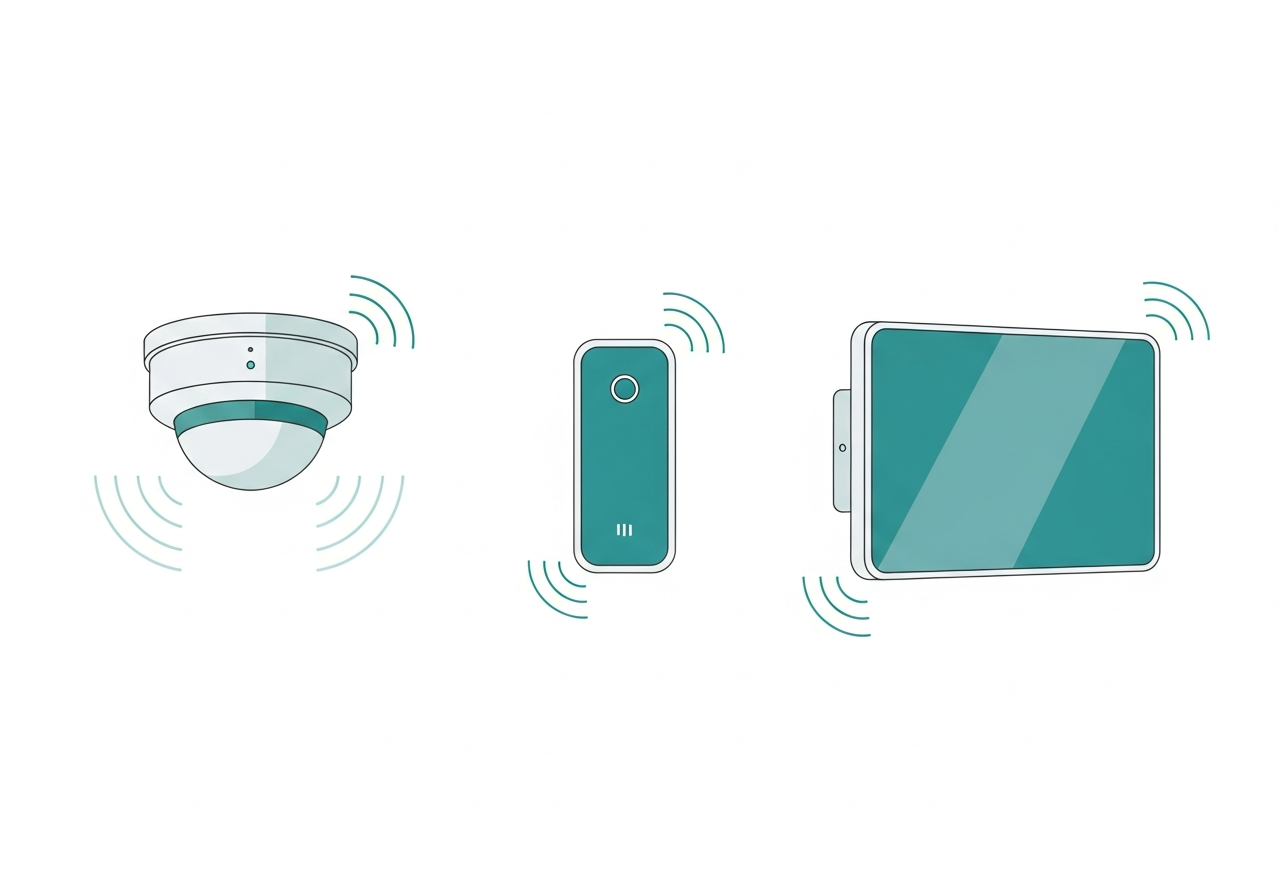
Skirtingų tipų IoT jutikliai atlieka skirtingas funkcijas biuro erdvės valdyme. Visi jutikliai renka anoniminius naudojimo duomenis—be asmeninės identifikacijos ar stebėjimo—teikdami apibendrintas įžvalgas, kurios gerbia darbuotojų privatumą.
Užimtumo jutikliai
Ant lubų montuojami jutikliai aptinka buvimą ir skaičiuoja žmones tokiose zonose kaip atviri aukštai, bendros erdvės ir didelės posėdžių salės. Teikia zonos lygio užimtumo duomenis.
Geriausiai tinka:
- Atviro plano biurai
- Bendros erdvės
- Kavinės
- Didelės posėdžių salės
Stalų jutikliai
Maži jutikliai, montuojami po stalais, aptinka, ar atskiros darbo vietos yra užimtos. Įgalina tikslų stalo po stalo panaudojimo sekimą bendro naudojimo aplinkose.
Geriausiai tinka:
- Bendro naudojimo darbo vietų zonos
- Priskirti stalai
- Susitelkimo kabinos
- Telefono kabinos
Posėdžių salių jutikliai
Specializuoti jutikliai posėdžių salėms seka faktinį naudojimą prieš kalendoriaus rezervacijas, aptinka neatvykusius ir identifikuoja vaiduokliškus susitikimus, kurie švaisto vertingą erdvę.
Geriausiai tinka:
- Konferencijų salės
- Mažos susitikimų erdvės
- Video skambučių kambariai
- Vadovų kabinetai
Vidaus oro kokybės stebėjimas
Išmanieji biurai turėtų stebėti daugiau nei tik užimtumą. Aplinkos sąlygos tiesiogiai veikia darbuotojų komfortą, produktyvumą ir gerovę. Prasta oro kokybė, nekomfortiškos temperatūros ar didelė drėgmė sukuria neoptimalias darbo sąlygas.
Aplinkos jutiklių integravimas su užimtumo duomenimis suteikia pilną vaizdą apie darbo vietos sąlygas, leidžiant pastatų valdytojams optimizuoti tiek erdvės panaudojimą, tiek komfortą.
CO2 lygiai
Rodo ventiliacijos pakankamumą ir oro šviežumą
Temperatūra
Šiluminio komforto stebėjimas pagal zonas
Drėgmė
Veikia komfortą ir pastato sveikatą
Ventiliacija
Oro kokybės ir cirkuliacijos vertinimas
Poveikis darbo vietos veikimui
produktyvumo padidėjimas su pagerinta oro kokybe
nedarbingumo dienų sumažėjimas su geresne ventiliacija
pažintinių funkcijų pagerėjimas su žemesniu CO2 lygiu
Biuro analitikos platforma
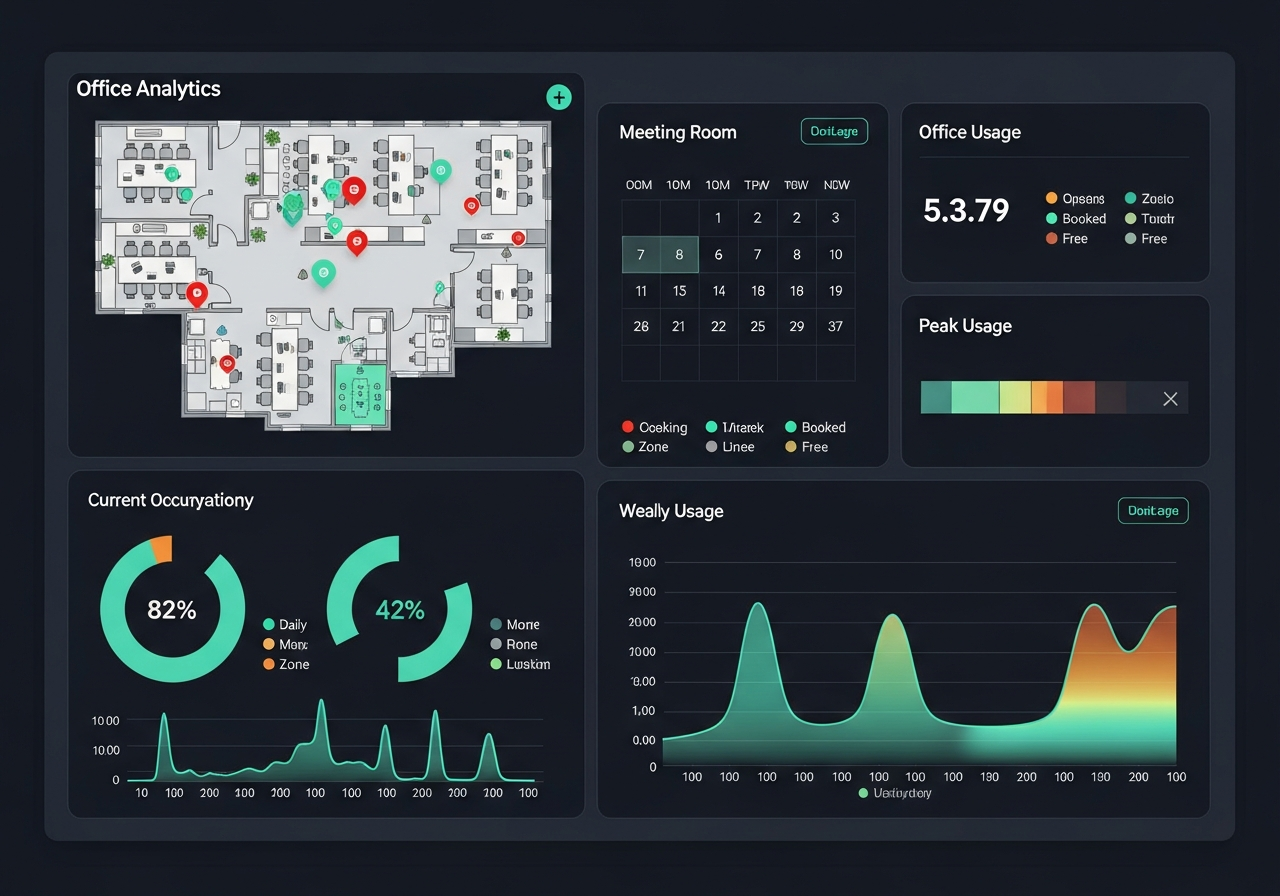
Visi jutikliai jungiasi prie debesų analitikos platformos, kuri paverčia neapdorotus duomenis į veiksmingus įžvalgas. Pastatų valdytojai įgyja pilną matomumą apie tai, kaip jų biuro erdvės iš tikrųjų naudojamos, leidžiant priimti įrodymais pagrįstus sprendimus.
Platformos galimybės:
Realaus laiko prietaisų skydeliai
Tiesioginis vaizdas į dabartinį užimtumą visose zonose
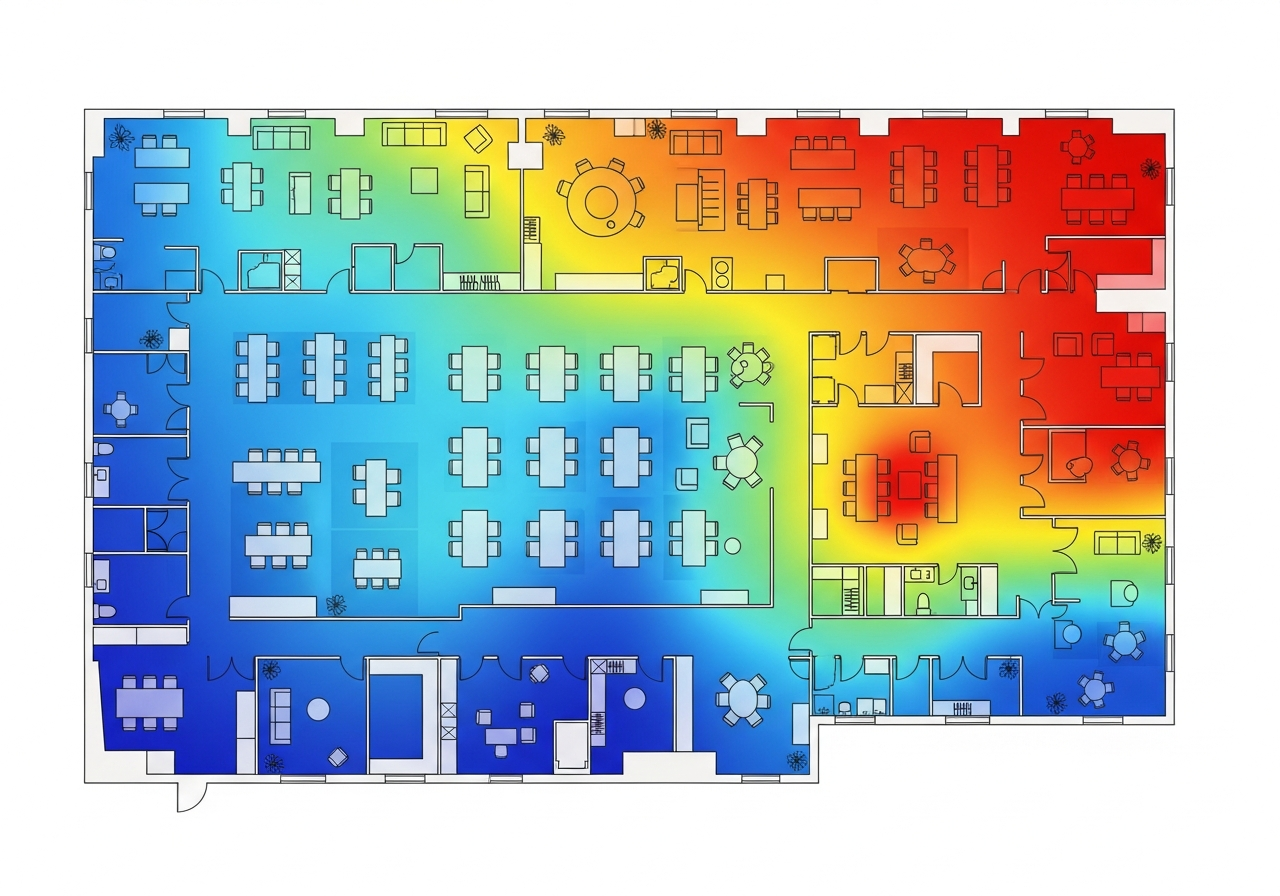
Užimtumo šilumos žemėlapiai
Vizualus aukšto ir žemo naudojimo zonų vaizdavimas
Posėdžių salių analitika
Rezervacija prieš faktinį naudojimą, neatvykusių rodikliai
Istorinės tendencijos
Dienos, savaitės, mėnesio naudojimo modeliai
Erdvės efektyvumo rodikliai
Panaudojimo rodikliai ir optimizavimo galimybės
Hibridinio darbo vietos valdymas
Biuro analitika tampa dar svarbesnė hibridinio darbo aplinkose, kur darbuotojai dalina laiką tarp biuro ir nuotolinio darbo. Faktinių naudojimo modelių supratimas padeda organizacijoms teisingai pasirinkti savo nekilnojamąjį turtą ir projektuoti erdves, kurios palaiko lankstų darbą.
Stalų rezervavimo sistemos
Leidžia darbuotojams iš anksto rezervuoti stalus, su realaus laiko prieinamumu, rodančiu, kurios vietos yra laisvos. Užimtumo jutikliai patvirtina rezervacijas ir automatiškai atleidžia neatvykusius.
Posėdžių salių prieinamumas
Rodo realaus laiko prieinamumą pagal faktinį užimtumą, o ne tik kalendoriaus rezervacijas. Identifikuoja ir atleidžia vaiduokliškus susitikimus, padarydami daugiau kambarių prieinamų produktyviam naudojimui.
Erdvės planavimas
Naudokite istorinius duomenis planuoti biuro išdėstymus, atitinkančius faktinę paklausą. Nustatykite optimalius stalų ir darbuotojų santykius, bendradarbiavimo erdves ir ramias zonas.
Nauda įmonėms
Išmanusis biuro erdvės valdymas teikia išmatuojamą naudą keliose dimensijose—nuo tiesioginių išlaidų sutaupymų iki pagerintos darbuotojų patirties ir tvarumo rezultatų.
Sumažintos nekilnojamojo turto išlaidos
Identifikuokite nepilnai panaudotą erdvę ir teisingai pasirinkite savo biuro plotą. Daugelis organizacijų sumažina nuomojamą erdvę 15-30% įdiegus analitiką.
Geresnė darbuotojų patirtis
Padėkite darbuotojams lengvai rasti laisvus stalus ir posėdžių sales. Sumažinkite trintį ir nusivylimą darbo vietoje.
Didesnis produktyvumas
Optimizuokite biuro išdėstymus pagal tai, kaip žmonės iš tikrųjų dirba. Sukurkite tinkamą bendradarbiavimo ir susitelkimo erdvių derinį.
Duomenimis pagrįstas planavimas
Pakeiskite prielaidas faktais. Priimkite nekilnojamojo turto ir darbo vietos sprendimus pagal faktinius naudojimo duomenis.
Tvarumo patobulinimai
Sumažinkite energijos švaistymą kondicionuodami tik užimtas erdves. Palaikykite ESG tikslus su išmatuojamais efektyvumo pagerėjimais.
Veiklos matomumas
Supraskite savo darbo vietą kaip niekada anksčiau. Pastatų valdytojai įgyja įrankius nuolatiniam optimizavimui ir tobulinimui.
Naudojimo atvejai
Išmanieji biuro sprendimai aptarnauja organizacijas įvairiose pramonėse ir dydžiuose, nuo įmonių būstinių iki švietimo įstaigų.
Įmonių būstinė
Dideli verslai naudoja biuro analitiką daugiaukštėms būstinėms optimizuoti, bendro naudojimo darbo vietų programoms valdyti ir hibridinio darbo politikoms tūkstančiams darbuotojų palaikyti.
Technologijų įmonės
Technologijų įmonės su lanksčia darbo kultūra remiasi stalų rezervavimu ir užimtumo duomenimis, kad sukurtų dinamiškas darbo vietas, prisitaikančias prie besikeičiančių komandos poreikių.
Vyriausybės pastatai
Viešojo sektoriaus organizacijos naudoja analitiką mokesčių mokėtojų finansuojamoms patalpoms optimizuoti ir efektyviam viešųjų išteklių naudojimui parodyti.
Universitetai
Švietimo įstaigos stebi paskaitas sales, bibliotekas ir mokymosi erdves, kad optimizuotų tvarkaraščius ir suprastų studentų naudojimo modelius.
Bendro naudojimo erdvės
Lanksčių darbo erdvių operatoriai naudoja realaus laiko užimtumą stalų prieinamumui valdyti, išdėstymams optimizuoti ir tiksliems pajėgumo duomenims nariams teikti.
Komercinis nekilnojamasis turtas
Turto valdytojai siūlo pastatų analitiką kaip nuomininko patogumą, teikdami užimtumo įžvalgas, kurios padeda verslams optimizuoti jų nuomojamas erdves.
IoT ryšys išmaniesiems pastatams
0g Baltics naudoja mažos galios IoT tinklus, sukurtus pastatų aplinkoms. Šie tinklai įgalina belaidį jutiklių diegimą be sudėtingo laidų vedimo, su akumuliatoriaus tarnavimo laiku, matuojamu metais, o ne mėnesiais.
Palaikomi ryšio variantai:
LoRaWAN
Didelis nuotolis, mažas energijos suvartojimas, idealus dideliems pastatams
NB-IoT
Korinio ryšio pagrindu, gilus patalpų prasiskverbimas
LTE-M
Mobilūs turtai ir didesnio pralaidumo poreikiai
Wi-Fi
Integracija su esama IT infrastruktūra
Pagrindiniai privalumai:
Ilgas akumuliatoriaus tarnavimo laikas
5-10 metų tipinė jutiklio veikla
Maža priežiūra
Įdiekite ir pamiršite instaliacija
Saugus ryšys
Šifruotas duomenų perdavimas
Keičiamo dydžio diegimas
Nuo bandomojo projekto iki viso pastato diegimo
Kodėl 0g Baltics
0g Baltics teikia pilnus išmaniojo biuro sprendimus—nuo IoT jutiklių iki debesų analitikos platformų. Jungiame aparatinės įrangos ekspertizę, ryšio infrastruktūrą ir analitikos galimybes į integruotus sprendimus darbo vietos optimizavimui.
IoT jutikliai
Užimtumo, stalų, posėdžių salių ir aplinkos jutikliai
Ryšio infrastruktūra
LoRaWAN, korinio ryšio ir hibridinio tinklo variantai
Debesų platformos
Analitikos prietaisų skydeliai ir ataskaitų įrankiai
Sistemų integracija
Sujungimas su esamomis pastato ir IT sistemomis
Išmaniųjų pastatų patirtis
Ekspertizė iš išmaniojo miesto ir pastatų projektų
Optimizuokite savo darbo vietą
Susisiekite su 0g Baltics, kad suprojektuotumėte išmaniuosius biuro sprendimus, kurie pagerina efektyvumą ir sumažina išlaidas. Nesvarbu, ar valdote įmonių būstines, universitetų miestelius ar komercinius pastatus, galime padėti.
Susisiekite su mumis
Aptarkime jūsų IoT projektą
Nesvarbu, ar norite diegti išmaniąją infrastruktūrą, mažinti veiklos sąnaudas ar tyrinėti IoT sprendimus, mes esame čia padėti.
El. paštas
info@0gbaltics.comKo tikėtis
- •Atsakymas per 24 darbo valandas
- •Pradinė konsultacija jūsų poreikiams suprasti
- •Pritaikytas sprendimo pasiūlymas