
Smart City IoT Infrastructure
We help municipalities deploy IoT infrastructure for smarter, more efficient cities. From environmental monitoring to connected services.

What is Smart City IoT Infrastructure?
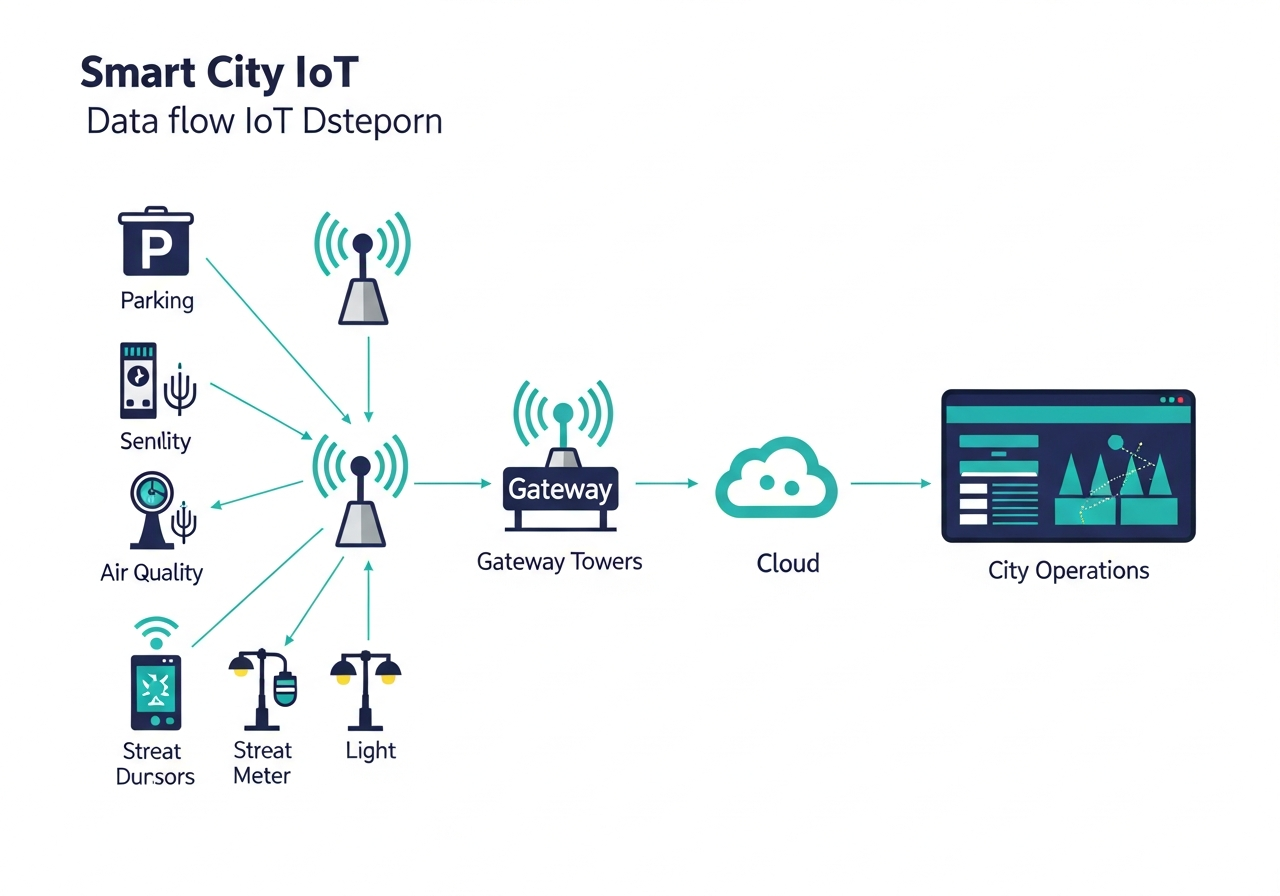
Smart city infrastructure is the digital backbone of connected urban services.
Urban data collected includes:
Why Many Smart City Projects Fail
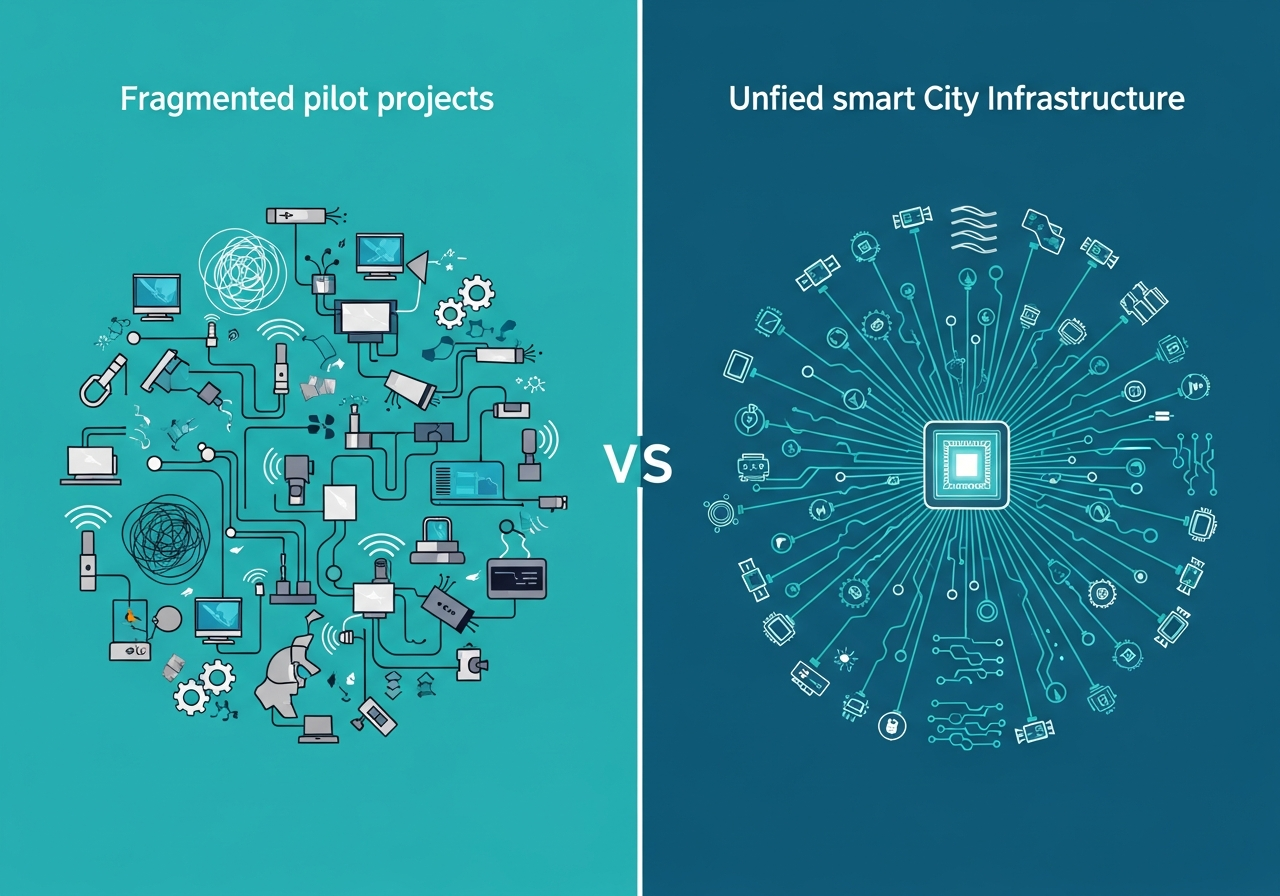
Many smart city initiatives begin with isolated pilot projects without building a long-term infrastructure strategy.
Common problems include:
The solution: Successful smart city strategies start with a shared connectivity infrastructure capable of supporting many services—not isolated pilots that cannot grow.
The Foundation of Smart Cities: Reliable IoT Connectivity
Smart cities require networks capable of supporting thousands of devices distributed across large urban areas. Different technologies serve different use cases, and the most successful deployments combine multiple connectivity options.
LoRaWAN
Long-range, low-power for city-wide coverage
NB-IoT
Cellular-based for deep penetration
LTE-M
Mobile assets and higher bandwidth
BLE Networks
Indoor and proximity applications
Satellite
Remote and backup connectivity
0g Baltics designs multi-connectivity architectures ensuring that each device uses the most efficient communication technology. This approach maximizes reliability while minimizing operational costs.
Why Cities Need Carrier-Grade Infrastructure
Urban infrastructure must operate continuously for many years—often decades. Smart city connectivity must therefore be designed as carrier-grade infrastructure, not consumer-grade solutions that cannot meet municipal reliability requirements.
These principles come from the telecommunications industry and ensure that city services remain operational over time, regardless of weather conditions, network load, or system changes.
Carrier-grade networks provide:
High Availability
99.9%+ uptime targets
Secure Communications
Encrypted data transport
Scalable Architecture
Grows with city needs
Professional Monitoring
24/7 network operations
Long-term Reliability
10+ year infrastructure
Redundancy
Failover capabilities
Infrastructure Layers
City Services
Parking, lighting, environment
City Platform
Data management and analytics
Network Servers
Device and data management
Gateways
Professional base stations
Devices
Sensors and endpoints
LoRaWAN Networks for Urban IoT
LoRaWAN is one of the most widely adopted technologies for smart city deployments worldwide. Its technical characteristics make it ideally suited for connecting thousands of sensors across urban environments.
Long-range connectivity
Single gateways can cover several kilometers in urban environments, reducing infrastructure investment.
Excellent penetration
LoRa signals reach sensors inside buildings, underground, and in challenging locations throughout the city.
Low power consumption
Battery-powered sensors can operate for many years without maintenance or replacement.
Large network capacity
A small number of gateways can connect thousands of sensors across the city.
0g Baltics deploys carrier-grade LoRaWAN infrastructure using professional TEKTELIC gateways and secure network architecture designed for municipal-grade reliability.
Range in rural areas
Range in urban areas
Sensor battery life
Devices per gateway
One Infrastructure, Many Urban Services
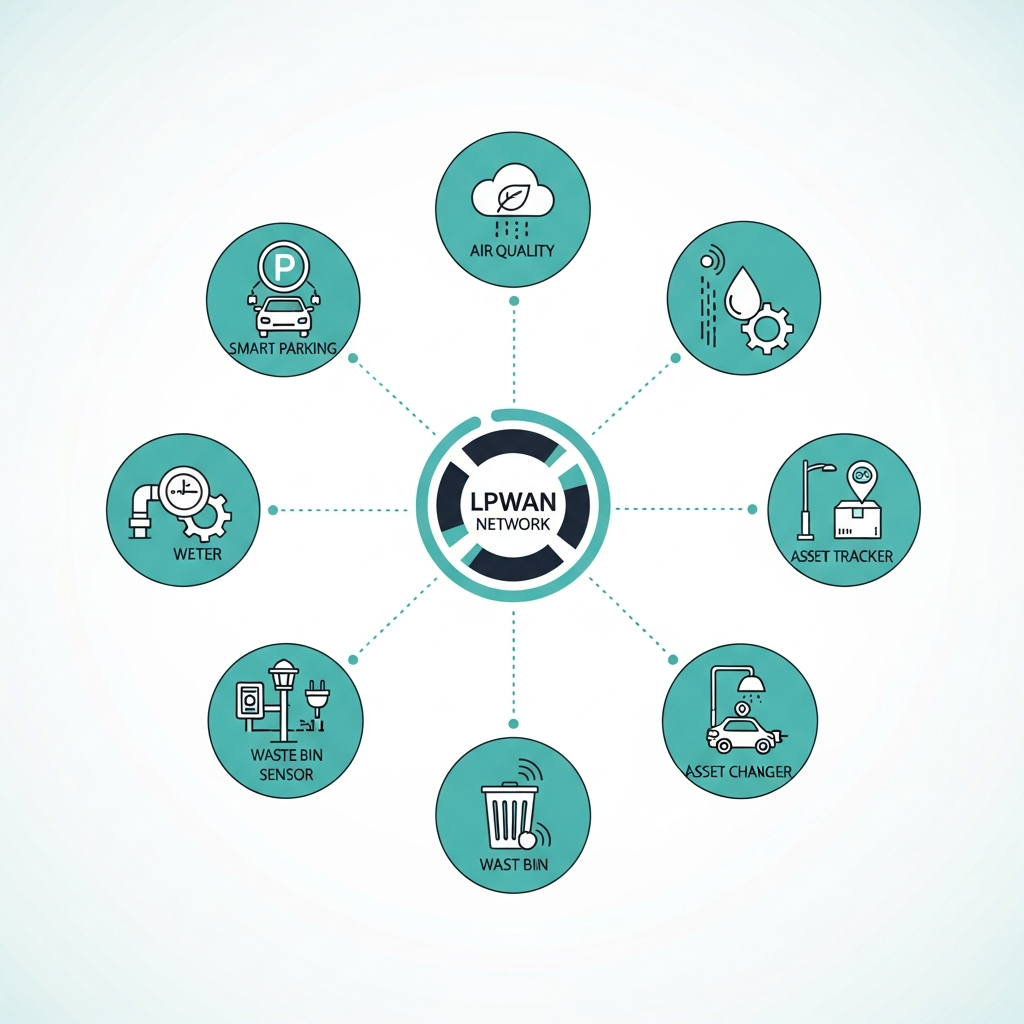
When a city deploys a shared IoT infrastructure, many services can operate on the same network. This approach reduces costs, simplifies operations, and enables cities to scale innovation over time.
Services that can share infrastructure:
New Services and Economic Development Enabled by LPWAN Networks
A city-wide LPWAN network is not only technical infrastructure. It becomes an innovation platform that enables economic activity and new digital services. Cities that deploy shared IoT infrastructure often see the emergence of new businesses and services.
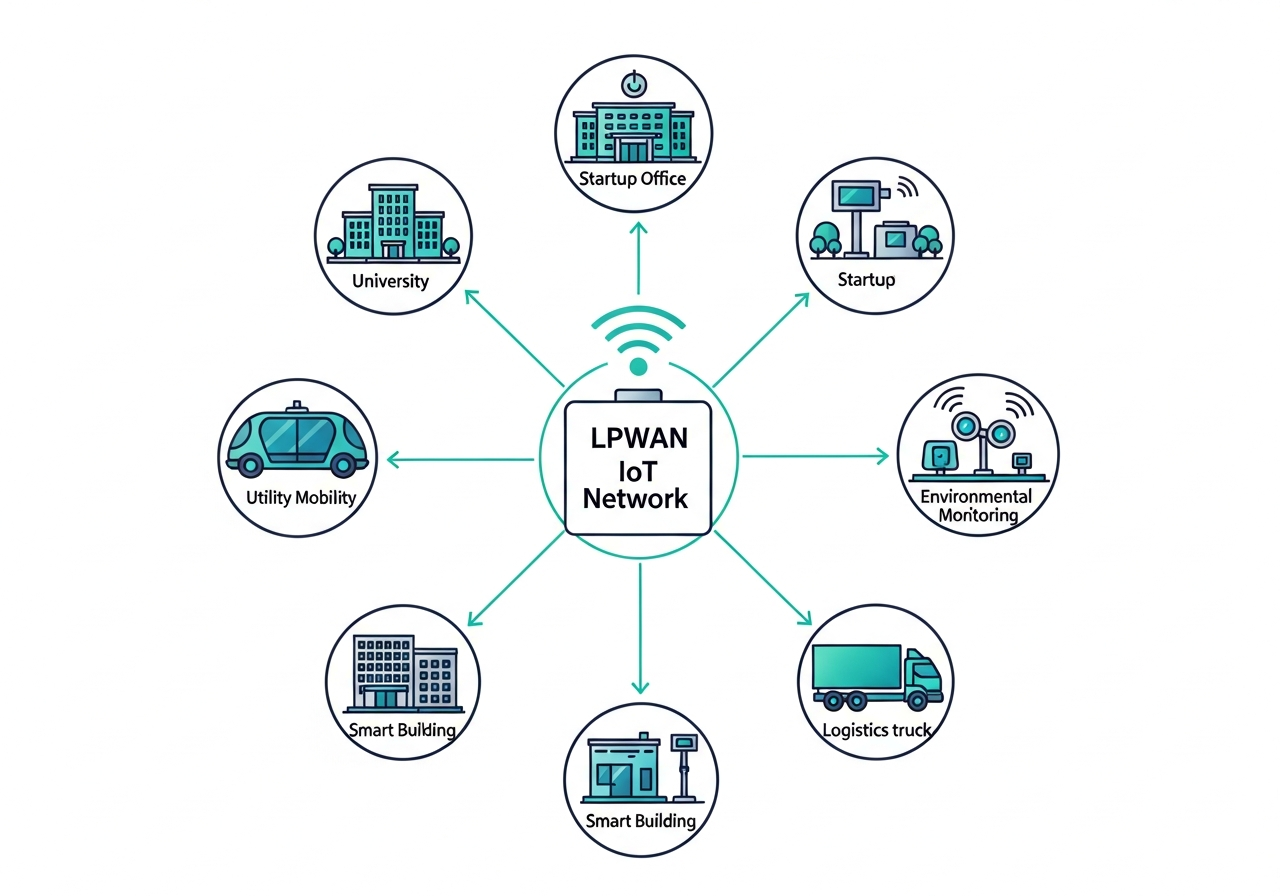
Organizations that can leverage city IoT infrastructure:
Instead of building their own connectivity infrastructure, these organizations can rely on the city's shared IoT network. This significantly reduces the barrier to innovation.
Think of it like fiber broadband: IoT infrastructure becomes a foundation for long-term economic development, enabling services that cannot exist without reliable connectivity.
New services that can emerge on city IoT infrastructure:
Smart logistics services
Last-mile delivery optimization
Environmental monitoring startups
Urban air and noise analytics
Equipment tracking services
Construction and industrial assets
Shared mobility monitoring
Bikes, scooters, vehicles
Energy optimization services
Building and grid management
Smart building providers
Commercial property services
From Sensors to City Intelligence
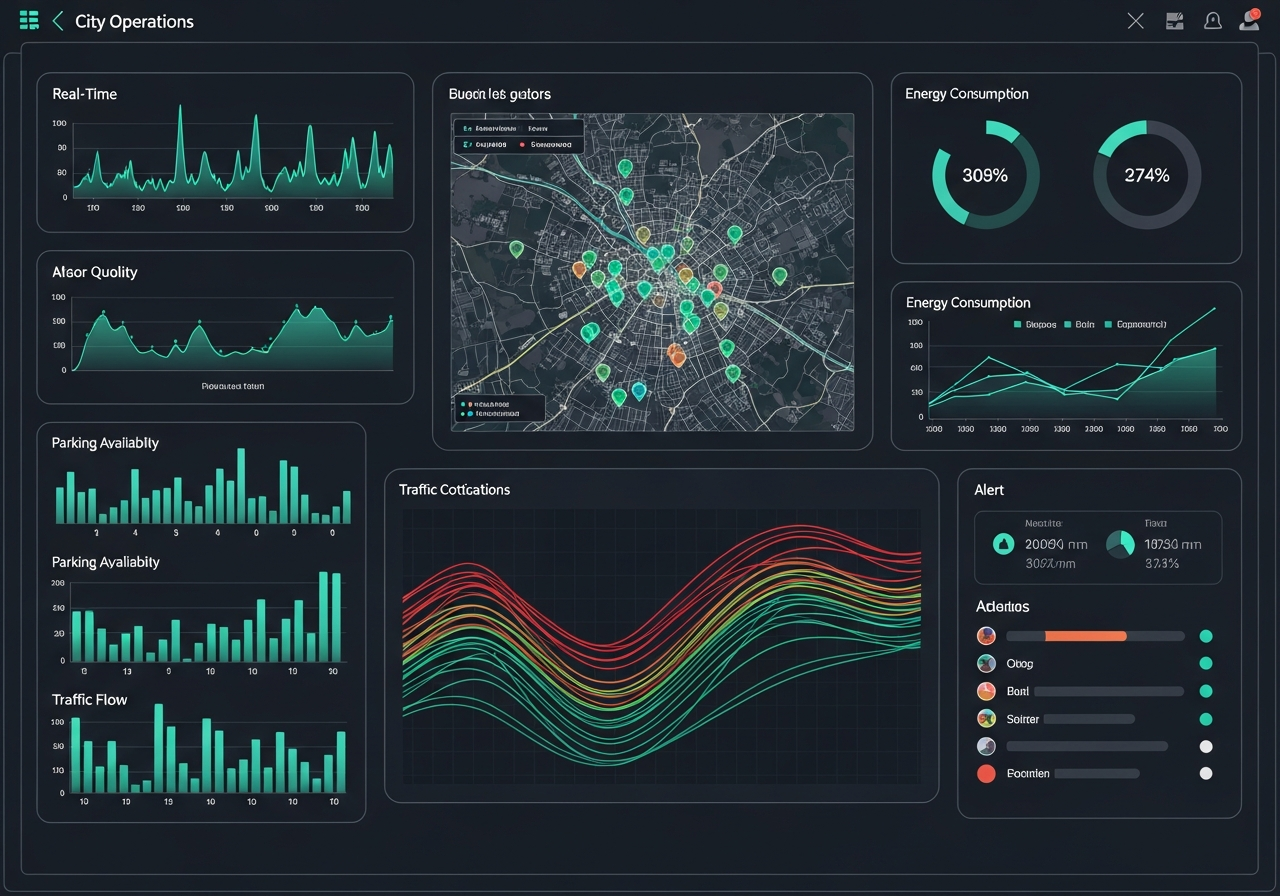
Smart city platforms collect data from thousands of sensors deployed across urban areas. This data helps city operators understand urban systems and make better decisions about infrastructure, services, and planning.
Data helps cities understand:
Over time, cities can optimize operations and make better planning decisions based on objective data rather than assumptions.
A Practical Deployment Strategy for Cities
Successful smart city deployments follow a progressive approach that reduces risk while enabling long-term scalability.
Deploy Reliable IoT Connectivity Infrastructure
Establish carrier-grade network coverage across priority areas. Install professional gateways and configure secure network architecture that can support thousands of devices.
Connect Priority Services
Deploy initial use cases such as smart parking, air quality monitoring, or water metering. Focus on services that deliver clear value and demonstrate infrastructure capabilities.
Expand Gradually to New Services
Add new services and departments over time. The shared infrastructure supports additional use cases without requiring new network investment.
Use Data Analytics to Improve Operations
Leverage collected data to optimize urban services, inform planning decisions, and demonstrate value to citizens and stakeholders.
Why Cities Work with 0g Baltics
0g Baltics provides the infrastructure expertise cities need to build successful smart city deployments. Our goal is to help cities build reliable digital infrastructure that supports long-term innovation.
Carrier-grade IoT connectivity
Networks designed for municipal reliability requirements
LoRaWAN infrastructure deployment
Professional network design, installation, and management
Multi-connectivity architecture
Hybrid networks combining LoRaWAN, cellular, and more
Smart city consulting
Strategic guidance for infrastructure planning
Integration with urban platforms
Connect sensors to city management systems
Build Your Smart City Infrastructure
Contact 0g Baltics to design scalable smart city connectivity and infrastructure. We help municipalities and cities build the digital foundation for long-term urban innovation.
Contact Us
Let's Discuss Your IoT Project
Whether you're looking to deploy smart infrastructure, reduce operational costs, or explore IoT solutions, we're here to help.
What to expect
- •Response within 24 business hours
- •Initial consultation to understand your needs
- •Tailored solution proposal