
Building Energy Efficiency Solutions
Monitor and optimize energy consumption in commercial buildings with IoT sensors and smart controls.
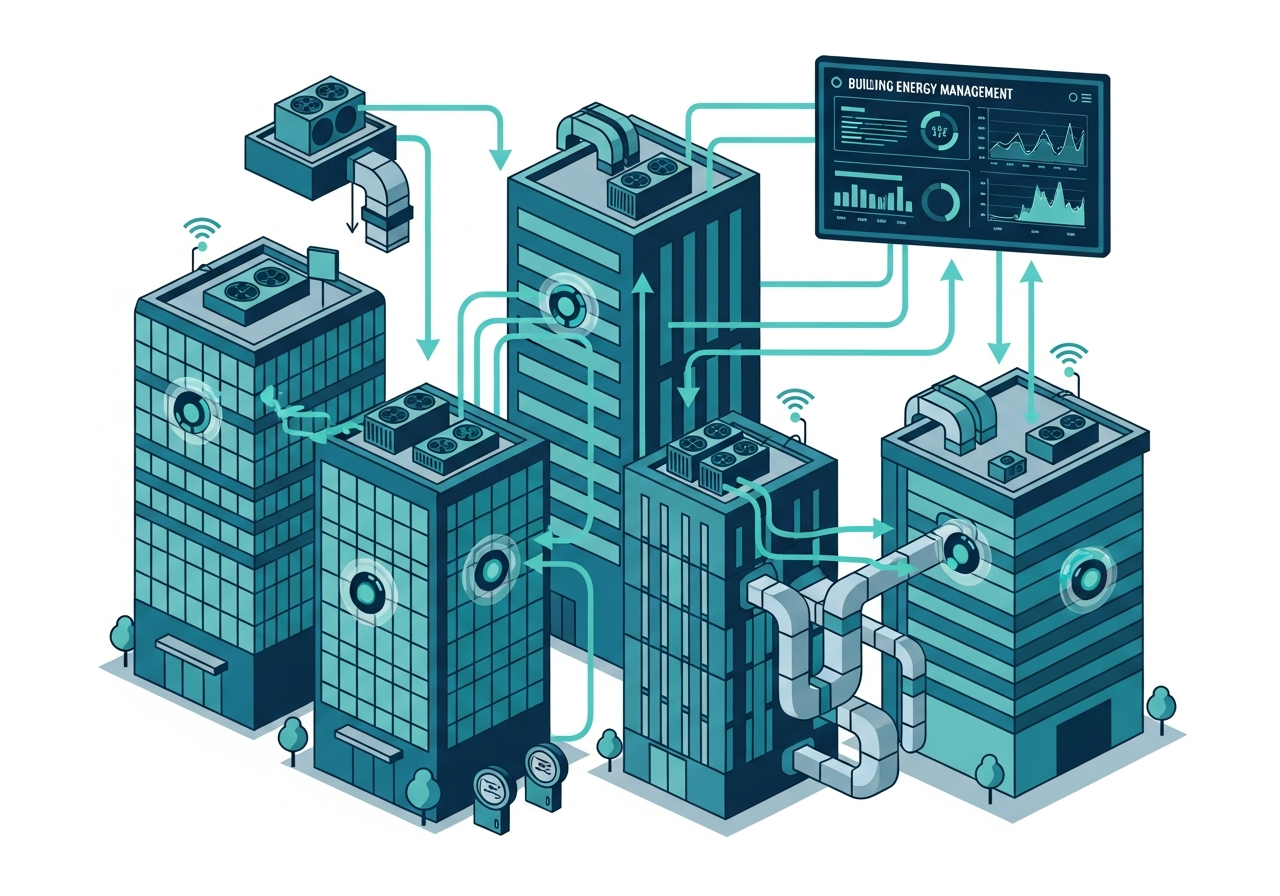
Buildings Waste Energy
Commercial buildings account for 40% of energy consumption. Most operate inefficiently due to lack of visibility and control.
of global energy consumed by buildings
typical energy waste in commercial buildings
savings achievable with smart monitoring
typical payback period
Energy Consumption Is Often Invisible
Many organizations do not have clear visibility into how their buildings actually consume energy.
Without Monitoring
With IoT Monitoring
IoT Energy Monitoring Systems
IoT sensors allow continuous monitoring of building energy usage at granular levels. Unlike traditional utility metering that provides only aggregate monthly data, smart sensors capture detailed information about how, when, and where energy is consumed.
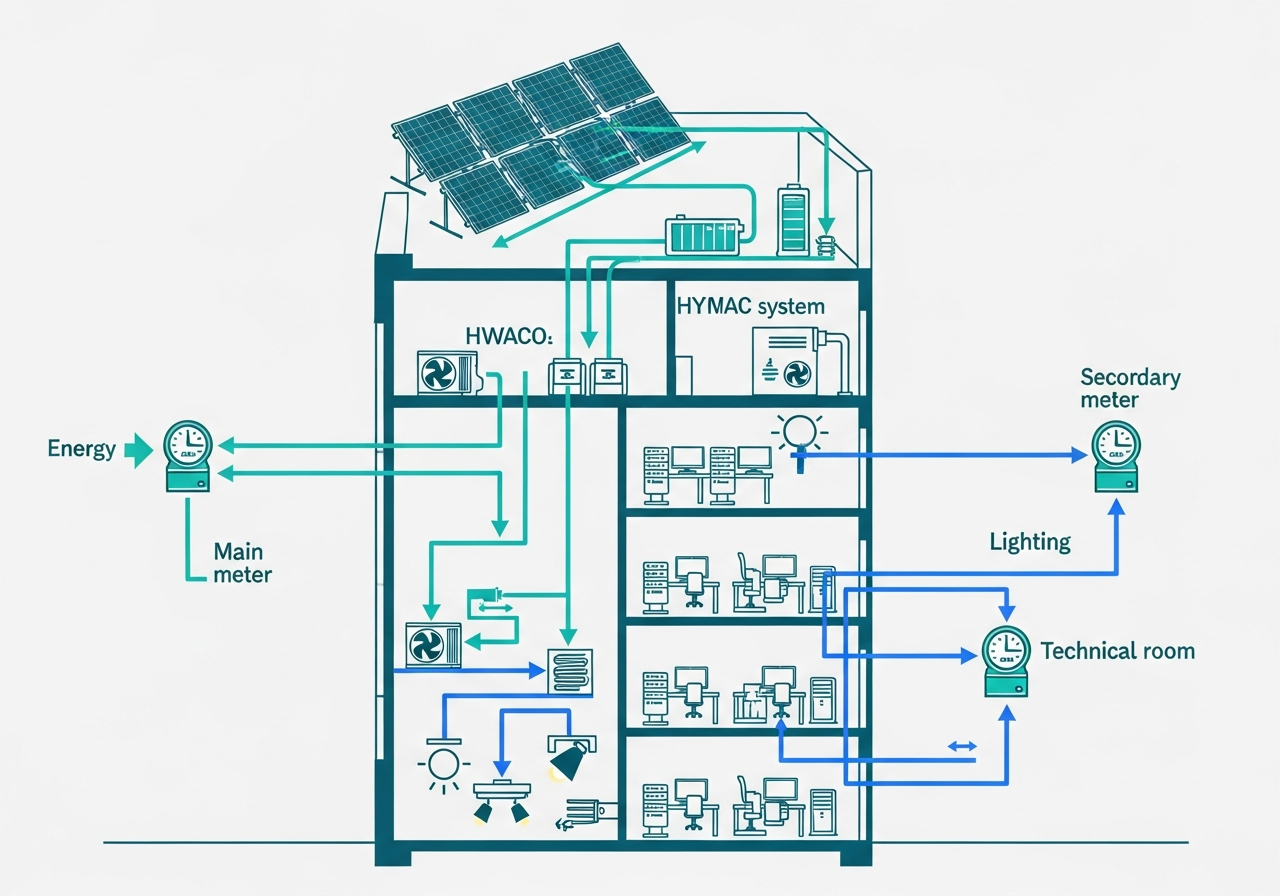
IoT devices can measure:
Electricity
Total and circuit-level consumption
Water
Usage patterns and leak detection
Temperature
Zone-by-zone thermal data
Humidity
Comfort and system performance
Occupancy
Space utilization patterns
Equipment
Runtime and operational status
This data is transmitted wirelessly via LoRaWAN or cellular networks to digital platforms where operators can analyze consumption patterns and identify optimization opportunities.
Energy Analytics and Optimization
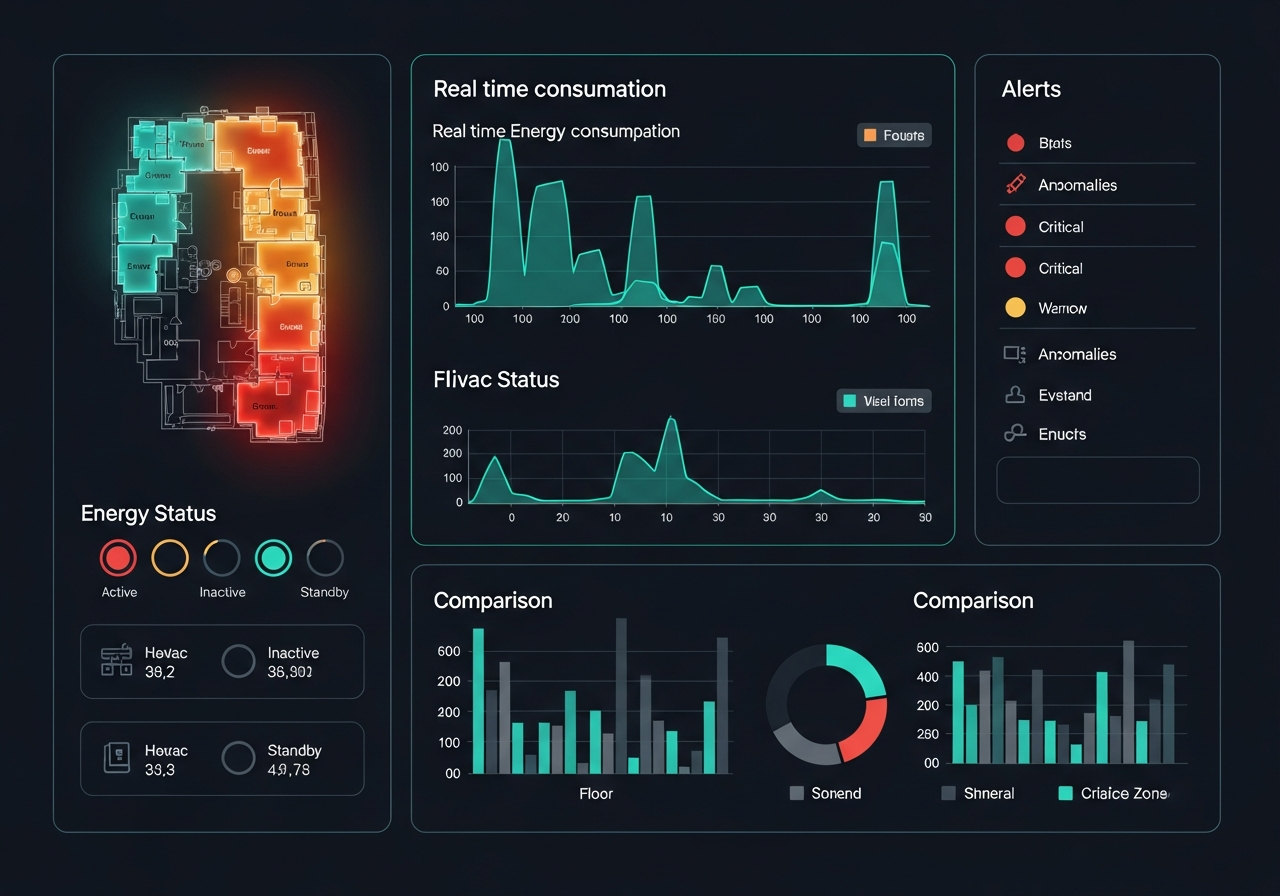
Once energy data is collected, analytics tools help identify inefficiencies and optimization opportunities. Modern energy management platforms apply algorithms to detect patterns, anomalies, and correlations that would be impossible to identify manually.
Typical insights include:
Organizations can use these insights to prioritize improvements, verify the impact of changes, and continuously optimize building operations.
HVAC Optimization
HVAC systems represent 40-60% of building energy use. Smart controls can reduce this significantly.
The Paradox of Current Regulation Systems
Traditional HVAC regulation systems, paradoxically, often lead to higher energy consumption.
- •On/off cycling creates temperature oscillations
- •Fixed schedules ignore actual usage patterns
- •No correlation between CO2 and ventilation
- •Systems compensate with oversized equipment
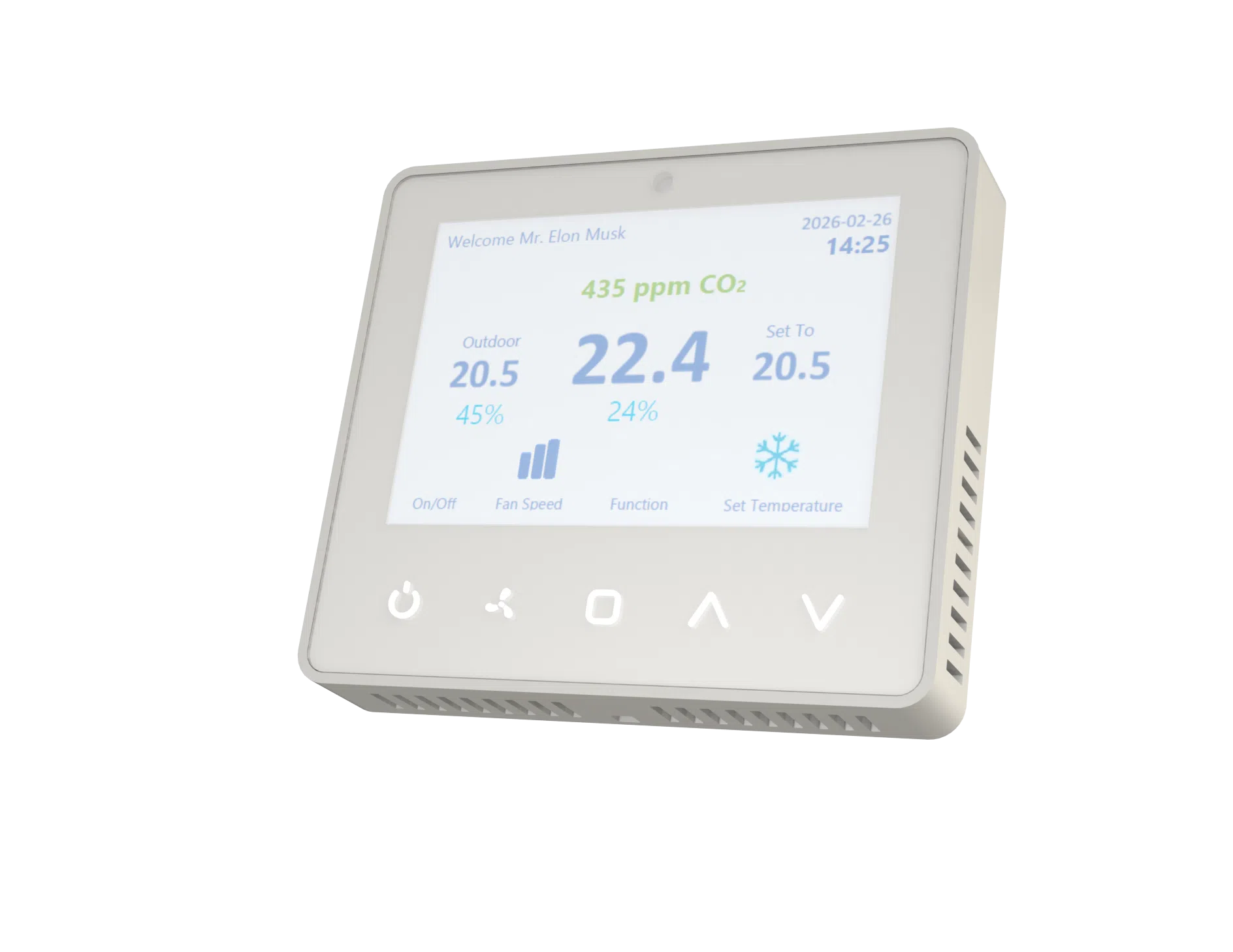
TEKTELIC Harmony
Intelligent thermostat combining CO2 monitoring, temperature/humidity sensing, and HVAC control.
By correlating CO2 levels with ventilation needs and actual occupancy, the Harmony optimizes HVAC operation to reduce energy consumption by 20-40%.
Occupancy-Based Energy Management
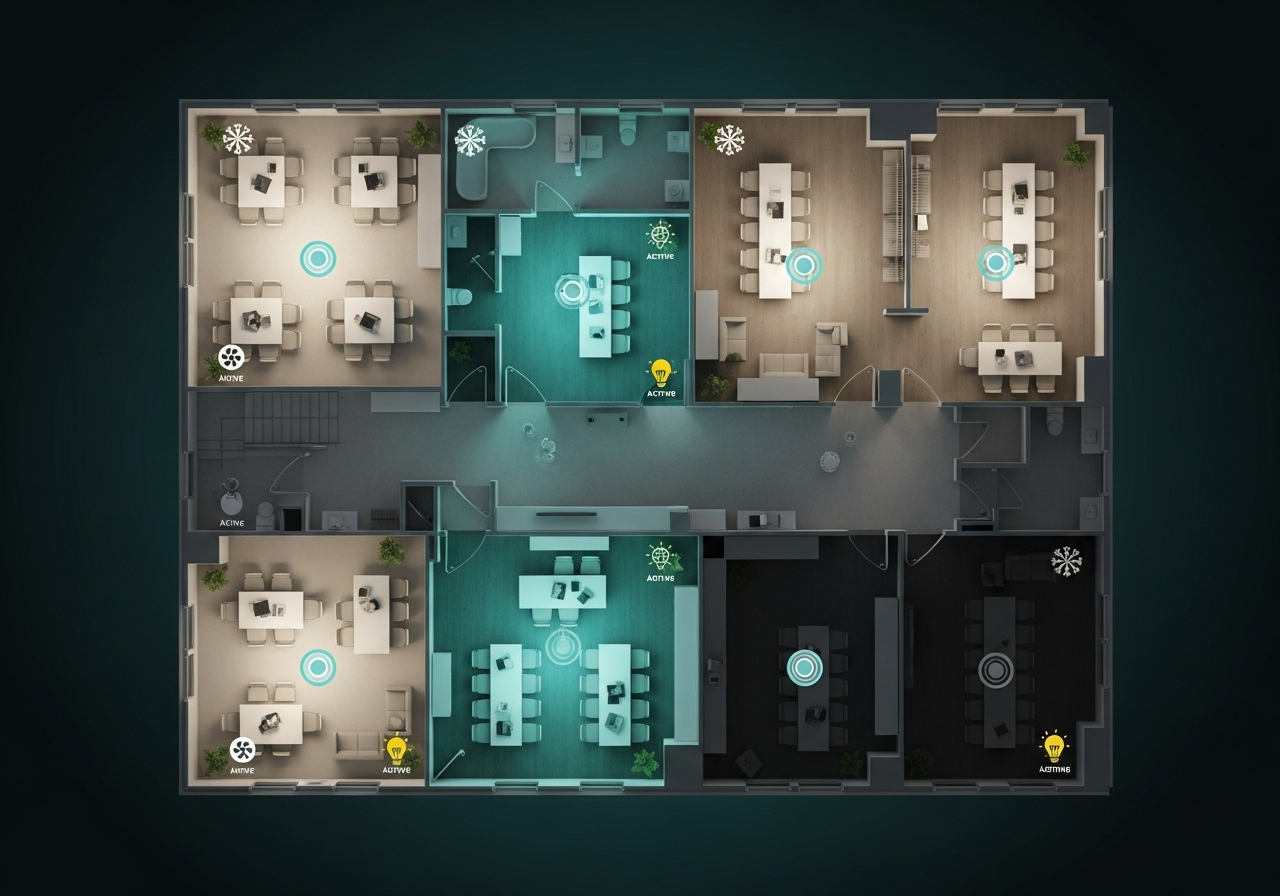
Buildings are often heated, cooled, and lit even when spaces are completely empty. Conference rooms prepared for meetings that don't happen, offices conditioned on weekends, entire floors lit overnight—this represents significant energy waste.
Occupancy sensors allow buildings to adapt energy usage to actual utilization patterns. When spaces are unoccupied, lighting can dim or turn off, HVAC can reduce output, and equipment can enter standby modes. When people arrive, systems respond automatically.
High-impact applications:
Sensors for Energy Efficient Buildings
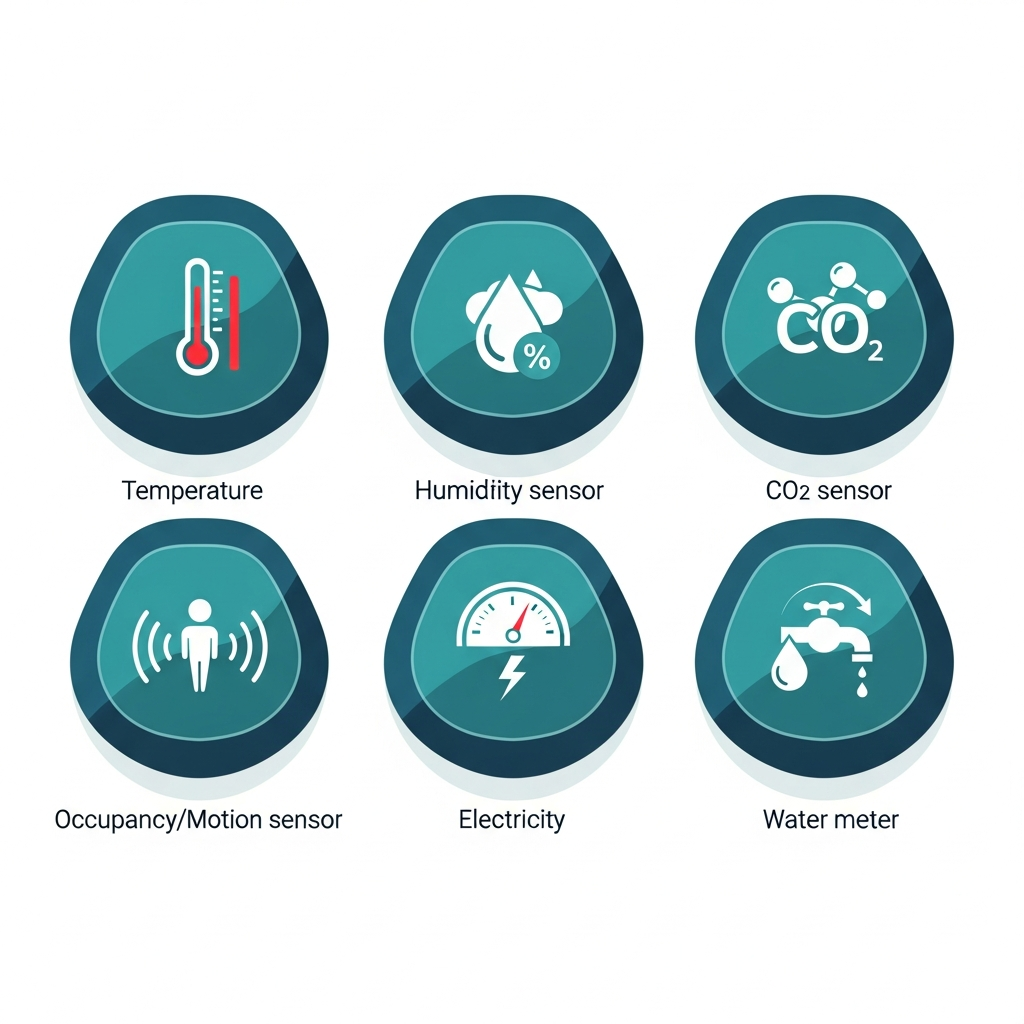
Energy optimization relies on multiple sensor types working together to create a complete picture of building conditions. Each sensor provides specific data that contributes to overall energy intelligence.
Temperature Sensors
Monitor thermal conditions across zones to optimize heating and cooling. Identify hot and cold spots indicating HVAC imbalances.
Humidity Sensors
Track moisture levels affecting comfort and system performance. Optimize dehumidification and prevent mold conditions.
CO2 Sensors
Measure air quality and ventilation adequacy. Enable demand-controlled ventilation that balances air quality and energy.
Occupancy Sensors
Detect space utilization in real time. Enable automatic adjustment of lighting, HVAC, and equipment based on presence.
Energy Meters
Measure electricity consumption at building, floor, or circuit level. Identify high-consumption equipment and usage patterns.
Water Meters
Track water consumption and detect leaks. Identify abnormal usage indicating plumbing problems or waste.
Energy Efficiency Standards and Regulations
Many countries now require improved building energy performance. Regulatory frameworks are becoming stricter, and organizations increasingly need monitoring systems to support compliance and sustainability reporting.
EU Energy Performance of Buildings Directive (EPBD)
Requires member states to establish minimum energy performance requirements for buildings and implement energy certification systems. The directive is pushing toward nearly zero-energy buildings.
Energy Performance Certificates (EPC)
Buildings must be rated for energy efficiency, with certificates required for sale or rental in many jurisdictions. Better ratings can increase property value and rental attractiveness.
ESG and Sustainability Reporting
Corporate sustainability reporting increasingly requires detailed energy consumption data. Monitoring systems provide the verifiable data needed for ESG disclosures and sustainability certifications.
Energy monitoring supports:
The Business Case for Energy Monitoring
Energy monitoring provides measurable, verifiable benefits. Organizations that implement comprehensive monitoring systems typically see significant returns through reduced energy costs, improved operations, and avoided equipment failures.
Typical Benefits
- 10-25% reduction in energy costs
- Extended equipment lifetime
- Reduced maintenance costs
- Improved occupant comfort
- Better operational visibility
- Data for strategic decisions
Investment Considerations
- Low-cost wireless sensors
- Minimal installation disruption
- Scalable deployment approach
- Cloud platform—no IT infrastructure
- Measurable ROI within 2-3 years
- Ongoing operational savings
Even small improvements matter: A 10% reduction in energy consumption for a building with €100,000 annual energy costs generates €10,000 in annual savings—compounding year after year.
Why Work with 0g Baltics
0g Baltics provides comprehensive energy monitoring solutions combining professional IoT sensors, reliable connectivity infrastructure, and powerful analytics platforms. Our goal is to help organizations reduce energy consumption and improve building performance.
IoT Sensors for Buildings
Temperature, humidity, occupancy, energy, and environmental monitoring
Energy Monitoring Systems
Real-time consumption tracking and analytics
LoRaWAN Connectivity
Reliable, low-power wireless infrastructure
Data Platforms and Analytics
Insights and optimization recommendations
Smart Building Consulting
Strategy and implementation guidance
Improve Your Building Energy Efficiency
Contact 0g Baltics to deploy smart energy monitoring systems for your buildings. Whether you manage offices, universities, or industrial facilities, we can help you reduce consumption and optimize operations.
Contact Us
Let's Discuss Your IoT Project
Whether you're looking to deploy smart infrastructure, reduce operational costs, or explore IoT solutions, we're here to help.
What to expect
- •Response within 24 business hours
- •Initial consultation to understand your needs
- •Tailored solution proposal